My Little Pony MBTI: Mane 6 Personality Types Explained
Looking for a My Little Pony MBTI chart? This fan-made guide compares possible MBTI types for Twilight Sparkle, Applejack, Rainbow Dash, Pinkie Pie, Rarity, and Fluttershy. It explains the reasoning behind each match while keeping a clear line between story evidence, interpretation, and official canon.
Quick Answer: The Mane 6 MBTI Matches
There is no official MBTI list for the Mane 6. A useful fan interpretation places Twilight Sparkle near INTJ or INTP, Applejack near ESTJ or ISTJ, Rainbow Dash near ESTP or ESFP, Pinkie Pie near ENFP or ESFP, Rarity near ENFJ or ESFP, and Fluttershy near INFP or ISFJ. These are working hypotheses, not canon labels or psychological diagnoses.
The best way to read the chart is to ask which motivations appear repeatedly. Does a character solve problems through planning, direct action, emotional support, social energy, or creative care? A single memorable scene should not decide an entire type.
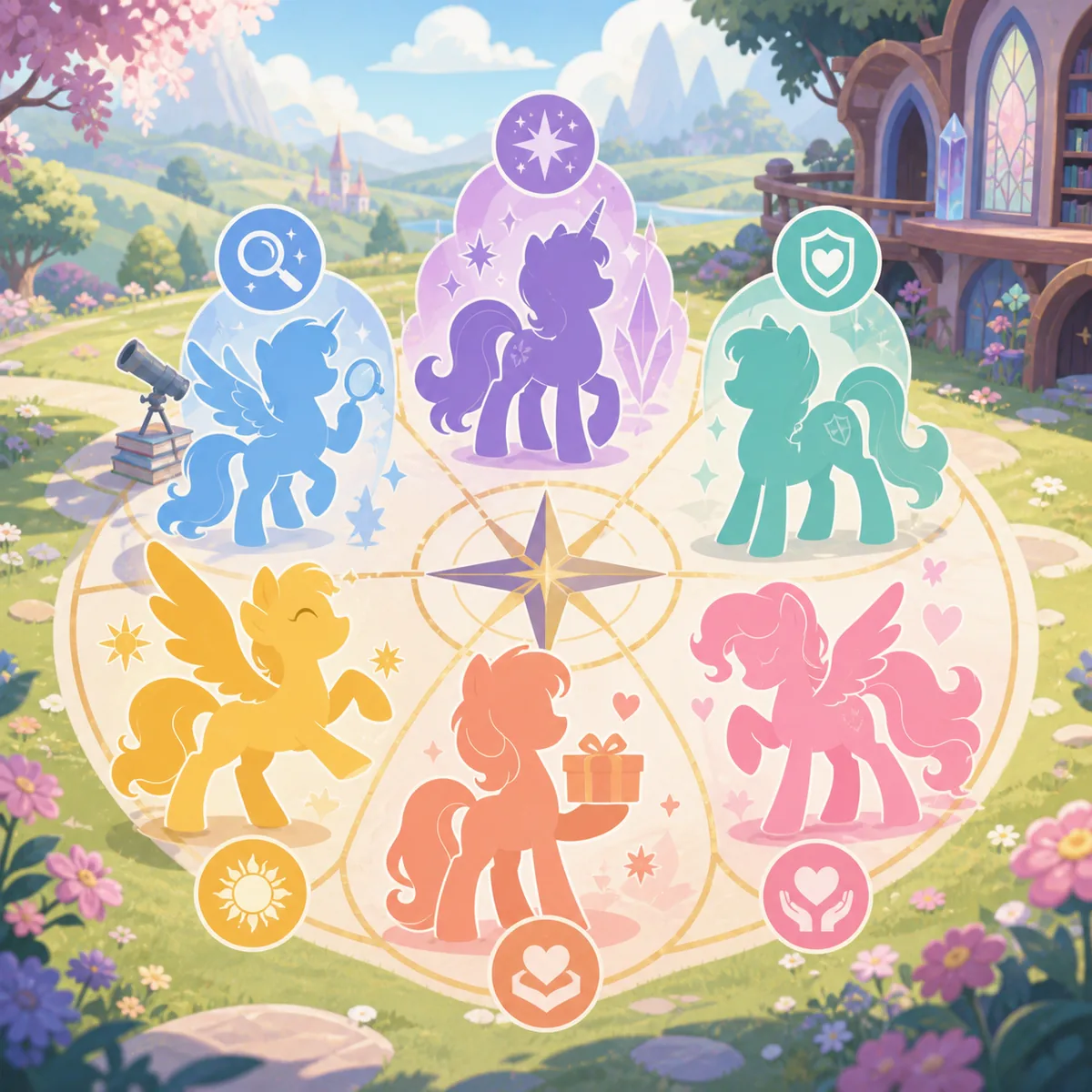
What Does My Little Pony MBTI Mean?
When fans search for my little pony mbti, they usually want a personality framework for discussing character behavior. MBTI is a four-preference model that produces sixteen four-letter patterns. It is different from a quiz that asks which pony you resemble, because it organizes how someone tends to gather information, make decisions, use energy, and approach structure.
That difference matters on a fan site. Twilight Sparkle can be a thoughtful planner in one episode and an anxious learner in another. Rainbow Dash can be bold in competition but deeply loyal in private. A type label should help you notice those patterns; it should not erase the contradictions that make a character interesting.
The official MBTI basics explanation describes preferences rather than a ranking system. This guide follows the same spirit: no type is “better,” and no pony is reduced to one letter pair. The labels below are fan analysis based on recurring story behavior.
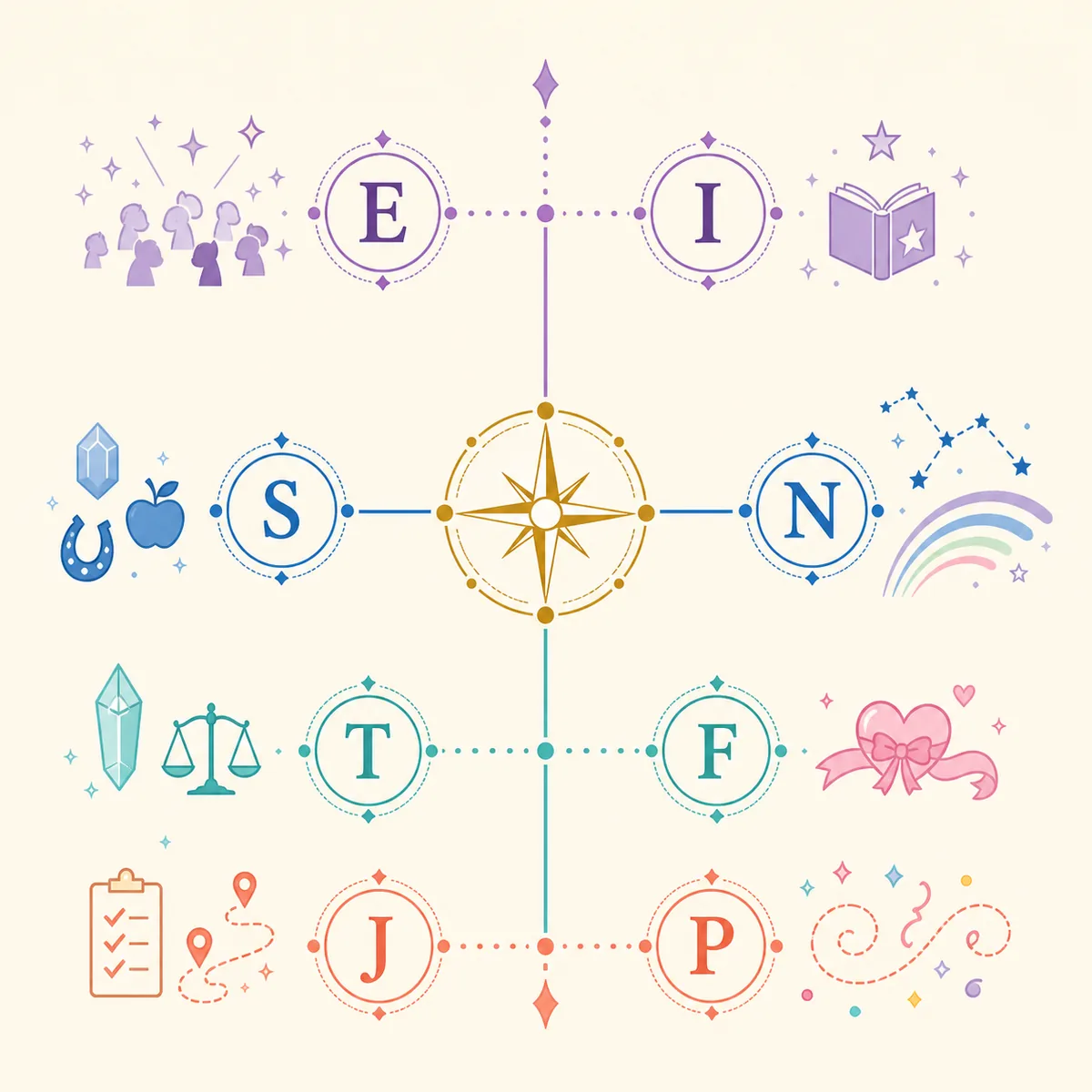
The Four MBTI Preference Pairs
Before comparing characters, it helps to understand what each pair is trying to describe. The letters are not shorthand for “good” and “bad,” and they do not mean that a person uses only one side.
| Pair | Plain-language question | MLP-style example |
|---|---|---|
| E / I Extraversion / Introversion |
Where does the character tend to direct attention and recover energy? | Pinkie Pie often processes life through shared activity, while Twilight may need quiet time with books and plans. |
| S / N Sensing / Intuition |
Does the character focus first on concrete details or patterns and possibilities? | Applejack trusts what can be observed and done; Twilight often connects ideas and imagines what could happen next. |
| T / F Thinking / Feeling |
What does the character emphasize when weighing a difficult choice? | “Thinking” does not mean cold, and “Feeling” does not mean irrational. The contrast is more about logic, values, and impact. |
| J / P Judging / Perceiving |
Does the character prefer a decided structure or an open, adaptable approach? | Applejack may want a dependable plan, while Pinkie Pie often thrives when a moment can change shape. |
Mane 6 MBTI Chart
The table gives one primary fan suggestion and one nearby alternative. The alternate matters because fictional characters are written for story tension, not built from a standardized questionnaire. Use the reasoning column as the main value, not the letters alone.
| Character | Primary fan type | Possible alternate | Reasoning shortcut |
|---|---|---|---|
| Twilight Sparkle | INTJ | INTP | Systems thinking, long-range planning, research, and a strong drive to connect knowledge into a useful plan. |
| Applejack | ESTJ | ISTJ | Practical responsibility, direct standards, loyalty to family, and confidence in work that produces visible results. |
| Rainbow Dash | ESTP | ESFP | Fast action, challenge-seeking, present-moment confidence, and a protective loyalty that becomes visible under pressure. |
| Pinkie Pie | ENFP | ESFP | Possibility, emotional connection, improvisation, and a talent for turning social attention into shared joy. |
| Rarity | ENFJ | ESFP | People awareness, expressive creativity, ambitious standards, and a desire to make other people feel special. |
| Fluttershy | INFP | ISFJ | Private values, gentle empathy, careful observation of vulnerability, and courage that appears when someone needs protection. |
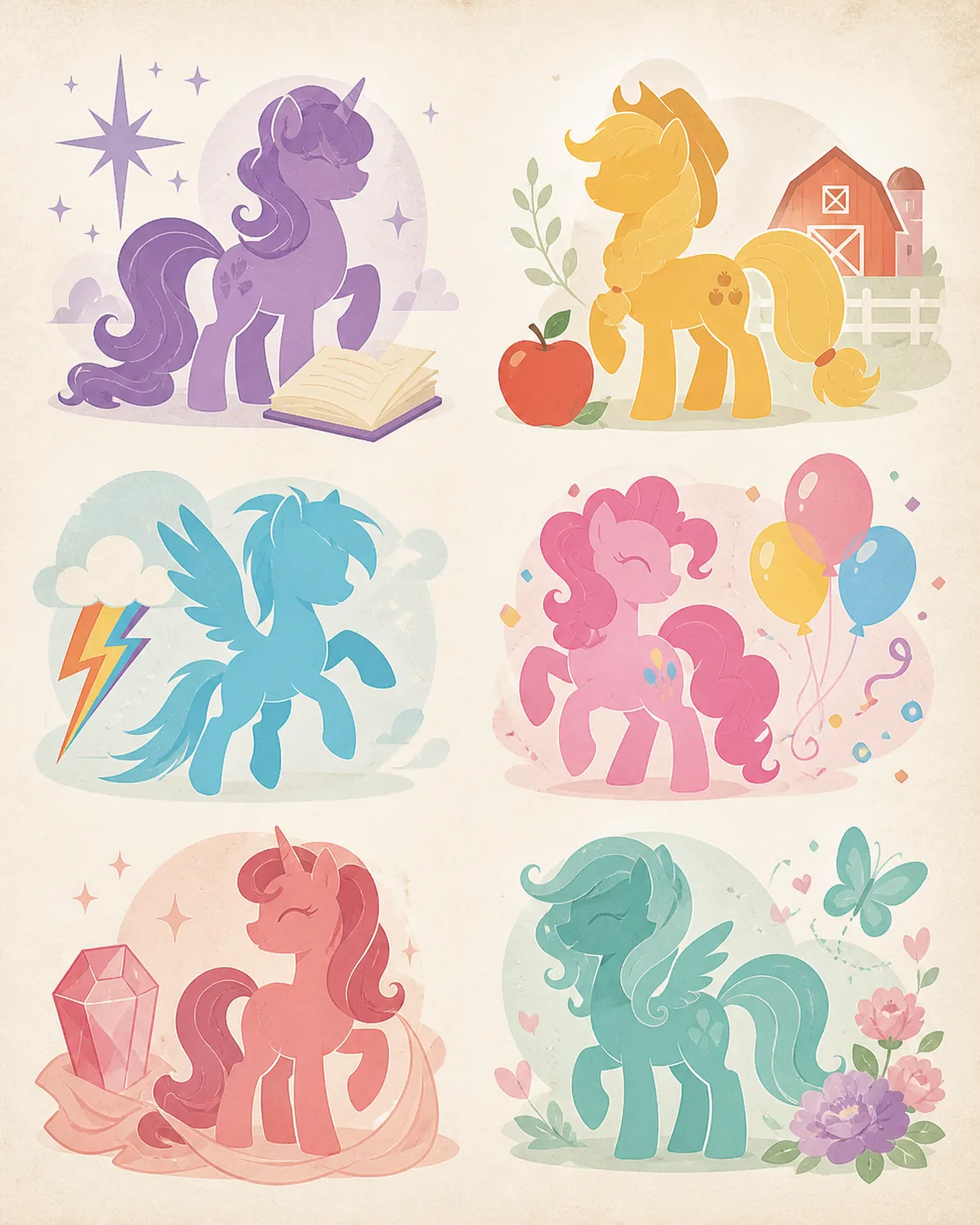
Character-by-Character My Little Pony MBTI Interpretations
Twilight Sparkle
Twilight is the easiest character to type through her relationship with knowledge. She builds systems, checks sources, anticipates consequences, and often feels calmer when a problem has been turned into a plan. That points many fans toward INTJ: a strategic pattern-finder who wants ideas to become workable structure.
INTP is a reasonable alternate when you focus on her curiosity, experimentation, and willingness to chase a new question. The difference is not “smart versus less smart.” It is whether her defining pattern looks more like directed strategy or open-ended analysis.
Applejack
Applejack tends to judge choices by reliability: who needs help, what promise was made, and what practical work will solve the problem. ESTJ fits the visible leadership, direct communication, and confidence in organizing a group around a clear responsibility.
ISTJ becomes more convincing when the focus is her steady routine, family tradition, and quiet follow-through. Both readings capture her grounded honesty better than a vague “country personality” label.
Rainbow Dash
Rainbow Dash is action-first. She sees a challenge, moves toward it, and often learns through doing rather than waiting for a perfect explanation. ESTP highlights her competitive energy, fast reactions, and ability to improvise in a changing situation.
ESFP is a useful alternate because her performance is also emotional and relational. She wants to be admired, but her strongest moments show that loyalty matters more than applause. Her type depends on whether the analysis emphasizes tactical action or expressive connection.
Pinkie Pie
Pinkie Pie notices social atmosphere almost like a sixth sense. She creates possibilities, connects separate groups, and uses humor to make belonging visible. ENFP fits the imaginative, possibility-rich side of her personality: every ordinary day can become an invitation.
ESFP is plausible when the emphasis is on immediate experience, performance, celebration, and reading the room in real time. Either way, her type should include her emotional intelligence rather than reducing her to “the funny one.”
Rarity
Rarity combines aesthetic imagination with a strong awareness of how other people feel. She can turn a gift, outfit, or event into a message about someone’s worth. ENFJ captures the people-centered encouragement and persuasive vision that sit underneath her dramatic presentation.
ESFP becomes a good alternate when her sensory creativity, expressive charm, and present-focused style lead the interpretation. Her generosity is important evidence: her ambition is not only about status, but also about helping others feel seen.
Fluttershy
Fluttershy is often typed as INFP because her decisions follow a quiet inner value system and her compassion extends to animals and characters others misunderstand. She may avoid attention, but that does not mean she lacks conviction.
ISFJ is a strong alternate when the focus is her careful memory of individual needs, patient caretaking, and dependable support. Her most important pattern is that kindness is active: when someone vulnerable is threatened, she can become remarkably firm.
Which MLP Character Matches Your MBTI?
If you already know your four-letter type, use it as a starting point rather than a final answer. Look for the motivation beneath the label:
- INTJ or INTP: start with Twilight Sparkle, then compare whether you prefer strategy, systems, or open-ended discovery.
- ESTJ or ISTJ: compare Applejack’s practical duty with the way you handle standards, promises, and routine.
- ESTP or ESFP: compare Rainbow Dash’s challenge energy with Pinkie Pie’s social immediacy and Rarity’s expressive creativity.
- ENFP or ENFJ: compare Pinkie Pie’s possibility-making with Rarity’s people-focused vision and emotional presentation.
- INFP or ISFJ: compare Fluttershy’s values and empathy with Applejack’s steady care and follow-through.
Then take the site's My Little Pony Test if you want a scenario-based result. The test asks about choices and friendship situations; MBTI asks about preference patterns. If the two results differ, that is not a failure. It simply means the frameworks are answering different questions.
Why My Little Pony MBTI Charts Disagree
Fan charts often disagree because fictional characters are not real test subjects. They are written to create contrast, humor, conflict, and growth. A character may act outgoing in a party scene, private during stress, logical in a work problem, and deeply values-driven in a friendship crisis.
Three variables cause the biggest differences:
- Behavior versus motivation: two characters may take the same action for different reasons. Applejack and Rainbow Dash can both rush to help, but duty and challenge are not identical motives.
- Story stage: early-season flaws and later-season growth can look like different types. A more confident Fluttershy is not necessarily a completely different person.
- Adaptation and fan context: Friendship Is Magic, Equestria Girls, comics, fan fiction, and fan databases may emphasize different traits. A careful article names the scope instead of pretending every source is interchangeable.
That is why this guide gives primary and alternate types. It is more honest to show a close interpretation range than to turn a playful fandom discussion into a false certainty.
What to Read Next
Use this page for the MBTI lens, then move to the page that matches your next question:
- MLP personality types explains Mane 6 friendship traits and how to interpret a quiz result without using MBTI labels.
- MLP Characters gives broader character profiles, roles, strengths, quirks, and relationships.
- Cutie Mark Test explores talent and identity through a different piece of Equestrian symbolism.
- Elements of Harmony guide connects the Mane 6 to the values that shape their story roles.
My Little Pony MBTI FAQ
Is My Little Pony MBTI official canon?
No. Hasbro does not publish an official MBTI chart for the Mane 6. The types on this page are fan interpretations based on recurring behavior, motivations, and story patterns.
What MBTI type is Twilight Sparkle?
Twilight Sparkle is commonly discussed as INTJ or INTP. INTJ emphasizes her planning and systems thinking; INTP emphasizes curiosity, analysis, and experimentation. Both are more useful when explained than when treated as a fixed answer.
What MBTI type is Fluttershy?
Fluttershy is often read as INFP or ISFJ. INFP highlights her private values and empathy, while ISFJ highlights her patient, detail-aware care for individual friends and animals.
Can I have a mixed MLP MBTI result?
Yes. You may identify with different characters in different situations, and fictional characters themselves show mixed traits. Use the chart to start a conversation rather than to force every detail into one label.
Is MBTI a psychological diagnosis?
No. MBTI is a personality preference framework, and this page is a fandom comparison. It is not a clinical assessment, diagnosis, or substitute for professional advice.
Final Takeaway
The best My Little Pony MBTI chart is transparent about uncertainty. Twilight Sparkle may read as INTJ or INTP, Applejack as ESTJ or ISTJ, Rainbow Dash as ESTP or ESFP, Pinkie Pie as ENFP or ESFP, Rarity as ENFJ or ESFP, and Fluttershy as INFP or ISFJ. Those pairings are useful because they give fans a shared vocabulary for discussing motivation, not because they are official labels.
For a playful character result, take the My Little Pony Test. For broader trait explanations, continue to the MLP personality types guide.